TechBuzz: Fresh Tech Look for Spring 2015

Techbuzz Spring 2015 Keynote address by Amy Wilkinson, author, The Creator's Code: The Six Essential Skills of extraordinary entrepreneurs

Techbuzz Spring 2015 Keynote address by Amy Wilkinson, author, The Creator’s Code: The Six Essential Skills of extraordinary entrepreneurs

Ideas all over the place at the Mid-Atlantic Venture Capital Association (MAVA) Spring 2015 TechBuzz in DC’s The Sphinx Club.  It was as if Elon Musk’s head had exploded.

To get off to a great start, MAVA’s Executive Director, Julia Spicer, introduced Keynote speaker, Amy Wilkinson, author of The Creator’s Code:  The Six Essential Skills of extraordinary entrepreneurs.  The book highlights teachable skills practiced by 200 of the most successful entrepreneurs of our time.  In addition to spending four years on outstanding research, Amy has held leadership roles with McKinsey & Company and J.P. Morgan, been White House fellow and special assistant to the U.S. Trade Representative, and has lectured at Stanford and Harvard Universities, etc.  [Dedicated Creator’s Code post coming soon]  

I enjoyed the polished pitch from founder and CEO of Sickweather(r) – See what’s going around(tm), Graham Dodge, a TechStars graduate currently raising $1.5 in seed funding led by my favorite back-in-the-day interviewee, Brad Feld, VC, cofounder, The Foundry.

Graham Dodge, co-founder/CEO, Sick Weather(r): see what's going around (tm) starts his 4 minutes off well with a heat map of the US.

Act 1: CEO & Investor panel presentation feedback and observations.

Act 1: CEO & Investor panel presentation feedback and observations.

Feedback and lessons for all

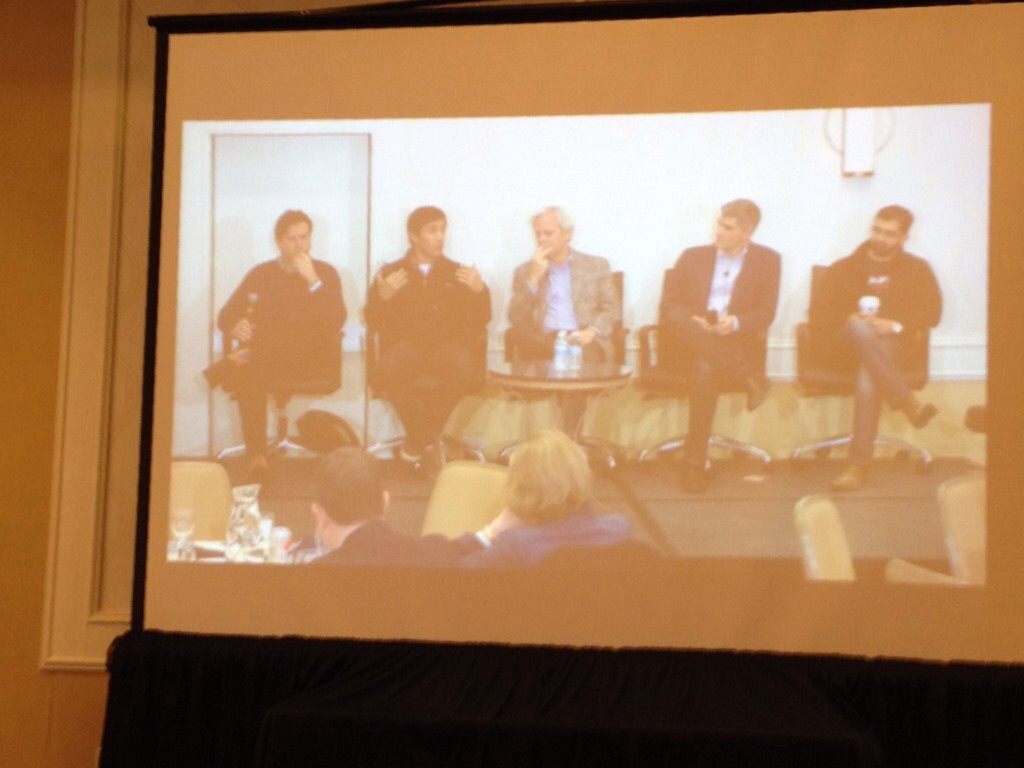
The all-star cast of 20 total entrepreneurs selected by a hands-on investor/entrepreneur committee received feedback two four-person investor panels:

Act 2: MAVA's Julia Spicer introduces CEO and Investor Panel for  feedback session.

Act 2: MAVA’s Julia Spicer introduces CEO and Investor Panel for feedback session.

Interesting Presenter Mix

Pitching that day were: Antenna; Arcadia Power; BeHealth Solutions; BiJoTi (panelists cited for its presentation on adapting cybersecurity and generating business risk management intelligence); EquityEats; EventKloud “Audiences Delivered,”; Immersive 3D LLC (i3d), a gaming approach to science, technology, engineering, and math; Maya Health Network (smart-phone doctor consultation app that integrates demographic, medical, and diagnostic data in a patient-centered, cloud-based record with a back-end analytics platform that generates insights for doctors to improve patient care and create a more efficient and profitable practice.:); Medex Spot (Instant Telemedicine Service); Synapsify, Inc., platform allows enterprises to test analytics with a customized machine intelligent system that users can deploy to rank and prioritize content wihtout expensive in-house technical resources or expertise.  TidWit Inc.’s Exterprise(r) cloud-based network connects hundreds of organizations in more than 60 countries with their channel partners.

Hard to Ignore

Just when you thought you couldn’t get any  more distracted in your car, HeadsUP!, announced the first aftermarket hardware- connected car device of its kind, harnessing the capabilities of smartphones and adding its own functionality to upgrade any car into a “connected car.”  Co-founder, Smita Majumder, says it’s less of a distraction to mount your directions, messages, phone call capability onto the windshield edges than to fiddle with your cell phone — you know you do it anyway.   I have a hard enough time driving while navigating NPR.

ParkedIn seemed like yet another parking app until co-founder Matt Provo made it sound like AirBNB for precision monitoring capacity, demand and utilization of parking inventory before, during and after an event.  The VC sitting next to me perked up when he heard Harvard and Apple used in the same bio.  Oh, and SENTEL, Pfizer, Genworth Financial, American INstitutes for Research and UC Berkley.  ParkedIn has already got some great event manager and organization partnerships onboard, such as The National Cherry Blossom Festival.  Matt had me with his opening confession that when he first moved to DC he had amassed over $2,500 in parking tickets.  (Somebody tell him about Bikeshare?)

Panelists Expressed Interest in the following presenters:

  • GotMyJobs’s mobile collaboration tool appears to bring the construction industry into the 21st Century and got some positive attention from investor panelists.
  • Lineapple Inc., a smartphone app that lets you skip the line, see nearby promotions, and be rewarded for loyalty.  Co-founder, Danielle Jones, I could have used this when standing in line at the Gaudi Museum with three kids in the blazing heat.
  • MyMuzik.  This cloud-based music library platform accesses over 250,000 pieces of sheet music on a purpose-built device.  Download fees apply.  This Kindle for musicians would save a lot of trees and help spread culture worldwide.
  • QuotePie: Agents Competing to Earn Your Business.  This web-based insurance marketplace turned some heads with U.S. property and casualty agent penetration covering 94% of the U.S. market.
  • Return Logic: Compelling return analytics platform for e-commerce companies to reduce costly returns.

Thanks, Kim Weir, Deputy Executive Director, MAVA for suggesting Routeam, the gang I advise, check this out to hone our pitching skills!

Stay tuned for the story behind another notable presenter that caught the VC panelists eyes:  Improvonia.  It’s the back story on a promising idea that’s evolved through perseverance and paying attention in class in Georgetown’s MBA program.

Posted in entrepreneurial community, entrepreneurs, Funding, innovation, Investing, Startup DC, startups, Tech-Enabled Business, TechBuzz, Uncategorized, Venture Capitalists | Tagged , , , , | Leave a comment

Funding and Fueling Our Big, Fat Tech-Enabled Future

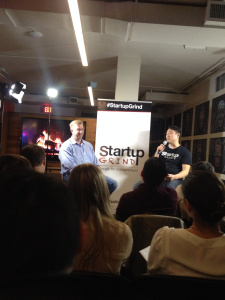
Peter Barris, Managing General Partner, NEA, has led over 25 investments in IT companies that have completed public offerings since 1988.  Featured last December, at Startup Grind at 1776 in DC.

Peter Barris, Managing General Partner, NEA, has led over 25 investments in IT companies that have completed public offerings since 1988. Featured last December, at Startup Grind at 1776 in DC.

There are a lot of really smart, experienced, and influential people in the DC area.  Thankfully, there are business community leaders who get them to come out to share their insights at various gatherings.

Peter Barris, the Managing General Partner of the world’s largest venture capital firm, New Enterprise Associates (NEA), packed the house at December’s Start-up Grind at 1776 in DC.  It’s worth checking out the full interview with Groupon’s founding investor who now leads the Chevy Chase, MD, firm that’s got about $13 billion to invest this year.  http://startupgrind.com/2014/12/peter-barris-whats-it-like-to-run-the-single-biggest-vc-fund-in-history/#sthash.NaiJTOZj.dpuf 

BUT WAIT…before you run off to pitch NEA, Peter Barris wants to be sure you understand one thing:  A fund as massive as NEA has to thrive, too.  It can’t just settle for any old investors dream of a 10X return, like investing $3 million to get $30 million out.  “That’s interesting,” but for a company our size it doesn’t move the needle,” he said, referring to the greatest lesson he learned from working under Jack Welch at GE:

“No matter how complicated the business seems, it really always boils down to one or two things that are the needle movers in the business.  Focus on them.”

So, you can be a great company, but if you don’t have the potential for “unlimited upside” NEA’s probably not your best shot for funding.  The good news is there is still room for all sorts of companies and plenty of other funding options around.  The key is finding the right match.

Big Idea CONNECTpreneur  Delivers

Investor Panel (LtoR) Moderator: James Quigley, Founder & CEO, Canvas; co-founder, Refraction; Todd Klein, Managing Director, Swan & Legend Venture Partners; Julia Taxin, Vice President, Grotech Ventures; Dan Mindus, Founder and CEO, Nextgen Angels; Kathryn Stewart, Managing Director, Cranbrook Capital.

Investor Panel (LtoR)
Moderator: James Quigley, Founder & CEO, Canvas; co-founder, Refraction; Todd Klein, Managing Director, Swan & Legend Venture Partners; Julia Taxin, Vice President, Grotech Ventures; Dan Mindus, Founder and CEO, Nextgen Angels; Kathryn Stewart, Managing Director, Cranbrook Capital.

The accomplished investor panel at the Big Idea CONNECTpreneur Spring Forum on March 12, 2015 at the Tysons Corner Marriott shared some insights on funding considerations, best practices, and finding the right match.

How to avoid the biggest funding pitch mistakes?

  • Understand the venture firm or angel group you’re about to pitch.  Know what industries they like, what stage they invest in, and their business model.
  • Be prepared to explain how your market approach — not just features — differentiates you from competitors.
  • Be conscious that you’re pitching someone who wants to make money on the money they’re going to give you.

Some Candid Observations

Forecast your numbers so you can hit them during due diligence.  Make them more realistic but aspirational. – Julia Taxin, Growtech Ventures

Investors don’t like surprises, good or bad. – Dan Mindus, Nextgen Angels

We focus on true domain experts.  People who know their field better than anybody else tend to be able to pivot quickly when things aren’t working and can adjust to change. – Todd Klein, SWaN & Legend Venture Partners

Whatever you do, set your milestones and deliver.  Then, people don’t care whether you’re a woman or a man. – Kathryn Stewart, Cranbrook Capital

If you’re not in the New York or Bay Area then it’s still tough to raise $1 million.  Most seed stage companies will start to piece it together from 3, 5, 10, 20, 50 different sources.  That’s a challenge for entrepreneurs; it’s one of the things Nextgen Angels is trying to address by doing $1-2 million rounds ourselves. – Dan Mindus, NextGen Angels

We have earned our cynicism by things people have said to us to get our money. – Todd Klein, SWaN & Legend Venture Partners

Biggest Trend Over Past 2-3 Years

Nextgen Angel’s Dan Mindus was enthusiastic about a trend that Peter Barris had also noted at Startup Grind:  Tech-enabled business models are bringing innovation throughout the funding food chain.

“Now there are companies like Uber or Airbnb, drone companies, lots of logistics companies out there where you have brilliant entrepreneurs attacking industries that have been stale for decades…,” said Dan.  “I like that trend.  It expands the scope of possibility for innovation.  I’m hopeful about that generally.”

A Tech-Enabled Pioneer

Tom Monahan, Chairman and CEO of the Corporate Executive Board Company (NYSE: CEB) tells the crowd at Connectpreneur

Tom Monahan, Chairman and CEO of the Corporate Executive Board Company (NYSE: CEB) tells the crowd at Connectpreneur “Know who you are and surround yourself with people who complement your skills.”

It was technology combined with self-knowledge and the confidence in his ideas that inspired CONNECTpreneur’s keynote speaker, Tom Monahan, Chairman and CEO of the Corporate Executive Board Company (NYSE: CEB since 1999) to leave his job at a major consulting company and join CEB founder, David Bradley, as an early employee of what has become this enormously successful company.

It all started on a double date with an inspiring woman he would end up marrying, and a consultant from another big firm, Jay McGonigle, who shared his frustration about aspects of the consulting professions that “didn’t suit our personalities.”

“Some subset of what consulting firms were doing neither served them from an economic perspective, nor served the teams or the clients,” he explained.

About a year later, his new friend Jay called him to discuss a tiny company in DC that offered a platform for them to build against the conversation they’d started.  They joined the budding company and began with a benchmarking tool for large companies, like GE, to address five major areas:  HR, Finance, IT, Sales and Marketing, and Legal Compliance.

“The idea that at any company there is a senior executive or their team that is working on a problem that everyone else in their job has, has animated us ever since,” he said.

Technology has been vital to the delivery of their products for years but we’ve entered a new era for business insights.

“We’ve invested heavily in great access portals and strong analytics platforms to help customers link our insights to their work.  The new news has been that we’ve increasingly been able to deploy technology ‘upstream’ in our process to analyze massive data sets to mine them for insights.  While I think that ‘big data’ is an over-hyped word, there is no denying that combination of growing data sets, more public data, and more powerful tool kits has opened up a range of business insights not previously available to us.”

Questions they ask when they think about serving clients?

  1. If we solve this problem does this save them money?  Is there a big dollar ROI?
  2. Does it recur?  (We like subscription businesses.)
  3. Is there an asset we can put at the center that scales?  Is it shared?
  4. Can we build a solution that delivers huge multiples of return?

“We don’t innovate by sitting in a room with a whiteboard,” Tom emphasized, “we innovate by talking to the best customer base in the world.”

No joke. Corporate Executive Board’s clients include 100% of the Fortune 100 and 90% of the Fortune 500.  So, somebody’s bound to be doing something cool and this tech platform can spot anomalies in their performance data.

“We think innovation and leading edge thinking is a process of co-creation with our customer base.  We’re humble enough to admit we probably don’t have the answer and we’re honest enough to go out and ask questions of the world.  Humility as a driver of innovation is often underrated.”

So, what are the one or two things that moves this business forward?

“Great people…From identifying locations to recruit, to screening candidates, to evaluating performance, to engaging employees, to designing and customizing development experiences, we have the unusual privilege of bringing the most powerful tools and technology to bear on talent decisions (our own).  And we can really see the impact that treating talent decisions with the same analytic rigor as financial decisions can have on the business.”

What’s an example of the coolest innovation insight you gained from client performance data?

“We continue to be amazed at how work itself is changing — and with it, the very definition of high performance.  Today’s highest performers in almost any corporate function successfully collaborate with peers across functional areas and geographies to a massive degree.”

A very approachable Tom Monahan engages with people outside the ballroom after his keynote conversation with Tien Wong.

A very approachable Tom Monahan engages with people outside the ballroom after his keynote conversation with Tien Wong.

How has your work changed?

Posted in DC Metro Area Startup Community, entrepreneurs, Funding, innovation, Investing, Tech-Enabled Business, Technology, Uncategorized, Venture Capital, Venture Capitalists | Tagged , , , , , | Leave a comment

Spotlight: Big Idea CONNECTpreneur, 2U CEO Chip Paucek & VC Panel Insights

 S. Tien Wong, in a photo from his blog, brings the entrepreneurial community together quarterly through warm and informative CONNECTpreneur events.

S. Tien Wong brings members of the entrepreneurial community together each quarter through Big Idea CONNECTpreneur events.

At Big Idea CONNECTpreneur’s Winter Forum, organizer Tien Wong’s positive energy filled the room. For about three years, the successful Virginia-based global tech company CEO of Tech 2000 and Appnetic, Chairman of Lore Systems, and investor, has gathered 250 or so CXOs, business leaders and investors each quarter for a half-day program at the Tyson’s Corner Marriott. Tien organized the event and describes it as “a celebration of entrepreneurship and a great way to see a lot of people all at once.”

Mixing the suit-clad community with tech-enabled startup CEOs given a pitch platform is good for business. It was refreshing to be in a friendly room without a VIP section.

Marissa Levin, CEO, Successful Culture and Washington Business Report contributor, makes it a priority to attend. She’s proud to call Tien one of her closest friends and most important mentors.

“There are a few people in our region that are shaking things up and doing things differently; Tien is definitely one of those people,” says Marissa. “Tien does an extremely good job of getting a room full of people who think differently and people who have ideas to pitch.”

Here’s 2U Chip Paucek

2U CEO, Chip Paucek, stands out in his suit thanks to the brightly colored Pashmina scarves he favors.

2U CEO, Chip Paucek, stands out in his suit thanks to the brightly colored Pashmina scarves he favors.

Tien interviewed featured guest, Chip Paucek, CEO and co-founder of 2U (NASDAQ: TwoU), the next generation of advanced online degree programs in collaboration with top-flight universities. The six-year-old company, which went public early in 2014, has raised $102 million in venture capital to support the investment component of its business model. The discussion with Chip was a good counterpart to the panel of traditional and nontraditional VCs on the current state of venture investing that followed.

Good Team Members Stick Together

“The third time’s the charm” said Chip, alluding to his first two familiar but financially unsuccessful ventures, Hooked-On Phonics and Cerebellum, a TV show that, thanks to greater access to the Internet, grew into a profitable series of middle school and high school courses taught by comedians.

In 2008, Chip and his co-founders were captivated by the idea of “desegregating” students pursing advanced degrees online so they could have the same faculty, rights, responsibilities, degrees, and ultimately, alumni network of students physically in attendance at many of the nation’s top universities.  Somehow, Chip convinced two deans at USC to offer advanced degrees online, first in education, then social work and nursing. He had no data, no university-level track record, oh, and asked for half of the revenue please.  Today, 2U’s over 800 employees include many previous team members.

“We got lucky,” Chip said in a later conversation.  “With more experience, I’m very happy to have had enough lumps to appreciate the wins — and that was a win.  We did right by it, though.  They were pretty tough disciplines to do online so we focused on the quality.”  Enter Georgetown’s Jeff Reid, Founding Director Georgetown Entrepreneurship Initiative, who opened doors, followed by others, including UNC Chapel Hill’s MBA program in which Chip is currently enrolled in an online program 2U made possible.  The concept is not to create 2U programs, but to expand university programs with an online option for students who must meet the same acceptance criteria as those on campus.

Focus on the business model

2U has spent over 6 years focused on its business model, which now serves about 10,000 students.  The idea is to add 500-1,000 new students to a program without diluting the brand or student experience.  The company is super selective a bout candidate programs because this is a two-way investment:

“2U invests between $5 and $10 million of negative cash in the first three years of a degree relationship and contracts are no shorter than 10 years,” Chip explains, “so it has to fit the investment thesis.”

Not only must the market opportunity be right for a particular degree offering, more importantly, it takes the right university leadership team to launch the program.

“We raised $102 million in Venture Capital, a massive commitment of faith from VCs,” says Chip who notes “funding to fund as well is pretty complicated.  So, we became obsessed with putting more data behind the selection process.”

2U build an algorithm to help predict enrollment for any school in the country that it takes online.

“Without USC and Georgetown, U2 wouldn’t exist,” says Chip.  “While technology does power the whole thing, it’s really about the will of a great institution.”  Chip credits Georgetown’s Jeff Reid for having the vision to help him approach the administration and appropriate departments there.

Stay focused, but flexible

“I take credit for keeping us focused and learning from failure,” he says.  “If you’re not focusing on that business model it’s easy to innovate yourself to death by continuing to drive some new product opportunity that really requires an entirely different set of business model principals.”  The 2U business model is based on five pillars:  course content from top schools; class size < 11 students per class; student inclusion into the university’s established networks; supplementary real-world experiences; and white glove support for students and faculty within their own time zones.

“We’re going to build the world’s best online advanced degree programs,” says Chip.  “That’s what we do.  We’re going to work with great colleges to do it and it’s working incredibly well.  It’s pretty rare to find this kind of organic growth potential to put capital to work.  I happen to believe that 2U is a rare company whose first act can be a billion in revenue.  I think that’s unusual and we’re not going to let it go.  The challenge is you’ve got to find that business model first.  Online programs existed long before 2U, what I think we’ve done is made them intimate, made them real, and made you a real member of the community in a way that you typically don’t see with online programs.  And, I’m very proud of that and excited about what it means for the future.”

The Investor Panel’s Perspective

Big Idea CONNECTpreneur "All-Star Investor" panel from left to right: Moderator, Jonathan Aberman, Bobby Ocampo, Jason Shrensky, Jake Tarr, and Paul Singh

Big Idea CONNECTpreneur “All-Star Investor” panel from left to right: Moderator, Jonathan Aberman, Bobby Ocampo, Jason Shrensky, Jake Tarr, and Paul Singh

Startup community leader and mentor, Jonathan Aberman, founder and managing director, Amplifier Ventures and Tandem NSI, moderated the experienced investor panel, providing a glimpse of the current state of investing.  I caught up with Jonathan by phone after the event to discuss what I’d heard.  Jonathan has hard-won insight from his investment experience and shares it readily as co-host of “Left Jab,” a live radio show with Mark Walsh on Sirius Radio.  He’s a straight-shooting, ex-Wall Street Lawyer raised in Philly and only somewhat mellowed by living in Virginia.  He is candid about the challenges facing venture capital:

“The VC industry is clearly going through a period of transition,” Jonathan says, “and there are very different opinions about how much it’s going to change.  From my viewpoint, the biggest issue with the venture industry now is the venture industry stopped being a venture industry in a lot of ways.  It’s just become another alternative investment asset.  Investors really don’t care whether it’s a hedge fund, venture fund, or a private equity fund, they care about ‘how much is my return and how much risk am I taking?’  The problem is that venture capital as an asset class finds it really hard to compete with hedge funds.  With hedge funds you get your money out every quarter.  With a VC fund, if you’re doing an early stage investment, it is 10-12 years before you know whether or not it’s a good investment.  So, the industry has moved away from that to high-velocity momentum investment, which is why they’ll throw money at UBER or SurveyMonkey.  The industry is changing into one that makes big investments to try to get money in 18 months to 3 years.  And, then, it’s left this huge void. Jonathan concludes:  Ultimately, I think the real challenge for our economy is that these $100 million funds go away and all you have left is momentum investors.”

Where you stand is where you sit

Jonathan points to the varying viewpoints on the panel.  On the one side you’ve got two really smart, good VCs in the traditional hands-on-model, Bobby Ocampo, Director, Revolution Ventures, and 27-year industry veteran Jake Tarr, Managing Director, Kinetic Ventures.  On the other hand, you’ve got smart, new model VC, Paul Singh, Founder & CEO Disruption Corp. and general partner of Crystal Tech Fund, Disruption’s post-seed venture capital arm, and straight-up Angel investor, Jason Shrensky, who among many projects was co-founder of co-working office space UberOffices.

For the new-model VC, a growing funding gap enabling companies to scale is filled by crowdfunding, angel funds, and other nontraditional investment.  Focused execution and speed rule.

I was behind the scenes of many VC/startup stories since writing for PwC’s Nextwave (featuring the MoneyTree VC investment survey) during the wild, heart-breaking ride of 1999-2004, so the traditional investor approach that most startups fail and traditional VCs rely on one or two big wins to return the fund is familiar standard wisdom.

It was interesting to hear what the VCs were up to and, as always, there was a bit of personal style on display.  Frankly, it’s not the first time I’ve heard Paul Singh say: “Now, this is public information, but still…don’t Tweet this…”

See a sampling of panelist quotes here: http://www.bizjournals.com/washington/blog/2014/12/the-investing-biz-is-changing-faster-than-you.html?ana+twt&page=all

Jonathan concludes: “The reality is nobody knows what’s going to happen. There are times in life where the trend is clearer and where you can extrapolate, and this is one of the moments when you can’t.” As for his latest project, Tandem NSI, funded by the Commonwealth of Virginia, will work to accelerate economic development and national security entrepreneurship by attracting government investment in the Greater Washington Region.

Keep Connecting

“One of the things that CONNECTpreneur has done an exceptional job of is helping to get people to lift up their eyes and say there’s more going on in this region than government contracting,” says Marissa.

Tien says simply: “We just put on an event I would absolutely hate to miss.”

I’m glad I went.

Posted in entrepreneurs, Funding, Investing, Technology, Uncategorized, Venture Capital, Venture Capitalists | Tagged , , , , | Leave a comment

One Decision Led Nick Lavezzo to Visual Sciences and FoundationDB

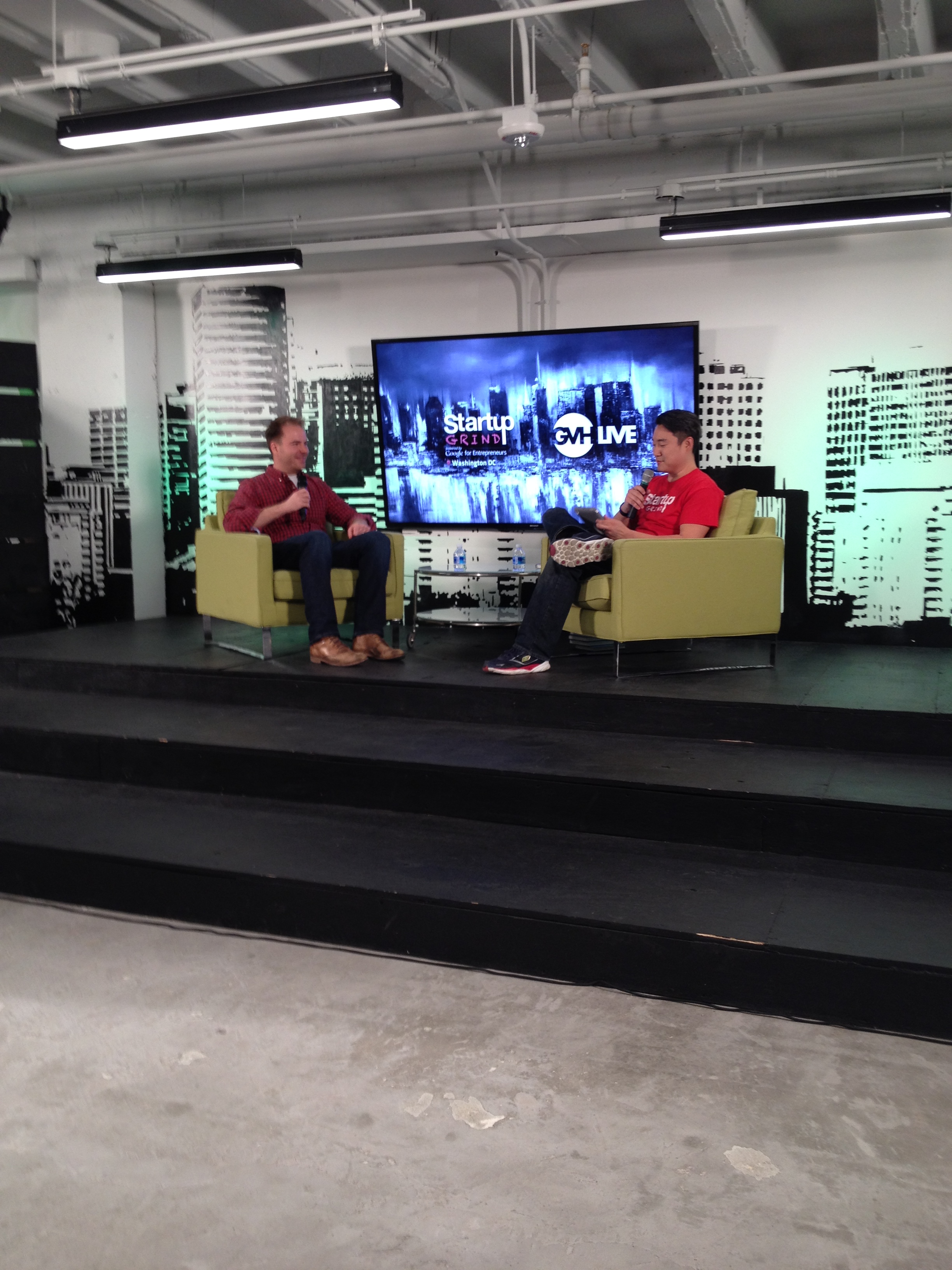
FoundationDB COO and Co-Founder, Nick Lavezzo, tells Brian Park how he continues to find the world's best engineers in the DC area.

FoundationDB COO and Co-Founder, Nick Lavezzo, tells Startup Grind COO, Brian Park, how he continues to find the world’s best engineers in the DC area.

The longer I live, the more I relate to Danish philosopher, Soren Kierkegaard’s observation:  “Life can only be understood backwards; but it must be lived forwards.”

Looking back, Nick Lavezzo, an early employee of Visual Sciences and now Co-Founder and COO of FoundationDB, made one decision at 22 that changed the trajectory of his life.

Following His Instincts

Nick hadn’t set out to join a start-up.  A highly motivated student from the Virginia suburbs, Nick graduated with a BA in Accounting in 2002 from Oral Roberts University, the interdenominational Christian, liberal arts university in Tulsa, Oklahoma named after its evangelist founder.  He passed the CPA exam right after graduation and got a good job auditing clients like Walmart at the Tulsa office of a Big Four accounting firm.  One year later, Nick had the undeniable need to move back to the DC area where he had grown up.  He’d planned to complete a respectable few more years of experience at a local office of the firm.  When the Tulsa office blocked his transfer in an effort to retain the high-achieving employee, he quit and moved back anyway.

Riding the Wave with Visual Sciences

Just two months after Nick returned to Northern Virginia, his best childhood buddy from two doors down, Dave Scherer, and Dave’s friend from Virginia’s renowned “TJ” — Thomas Jefferson School for Science and Technology, Dave Rosenthal, invited him to join their early stage start-up, Visual Sciences.  There was nothing out there like this high-performance data visualization software platform and some big organizations had taken notice.

The timing was perfect.  The proliferation of data spinning out of government and fortune 500 companies meant that anyone with billions of records would want a product to create real-time, web analytics. “There were not many tools out there,” says Nick.  “Eventually, we owned the top tier of the market.”  “Doing a startup in 2004 was a lot harder because there were fewer tools to get your MVP [Minimum Viable Product] up and running,” he observes.  They tapped their strong, personal networks and built the company entirely with angel funding.

By 2006, Visual Sciences was sold to WebSideStory, a publicly traded web analytics company.  About a year later, WebSideStory was re-named to Visual Sciences after the Visual Sciences leadership team was appointed to manage the larger entity.  In 2008, it was acquired in a deal valued at $394 million by Omniture, and shortly after that the three friends left to take time off.  Two years later, the company was acquired by Adobe in a transaction valued at approximately $1.8 billion.  Nick’s proud of what he and his friends built: “Our platform is part of the Adobe Analytics suite now and I think it’s still rated by Gartner as the top web  analytics tool.”  They’d come a long way since the second grade when he and Dave Scherer’s first business venture was based on making soda more sugary.

Enter FoundationDB

“It’s great to have a win under your belt in the start-up world,” says Nick.  “But, personally, I knew I needed to keep doing cool new start-up stuff.  I was 28 when I was done with that company.  There was no question that as a team we wanted to continue doing valuable things.”  Now age 34, Nick and his co-founders are five years into building the company around FoundationDB,  a powerful, multi-model database that counts among its investors Silicon Valley’s Ron Conway and Sutter Hill Ventures.  It’s been a long road, but phase one, The Key-Value Store, is complete and downloadable as of last September.

Exploring One Idea Led to Another

After coming back together, the team explored new product ideas.  “We looked at Twitter and said ‘140 characters and somehow it’s worth a billion?'” Nick recalls.  The team decided to “churn out a bunch of easy applications, get them out the door and see what sticks.”

But, Nick’s two co-founders, being hardcore computer science engineers, wanted to make sure that they built the apps on a common stack so that the engineers could move between projects easily.  There were all sorts of great new technologies that didn’t exist in the early 2000’s and high productivity languages to use, but digging in to pick the data storage level of their stack presented the team with a compromise it didn’t like:

You could get a NoSQL database distributed across machines — a highly fault-tolerant design for the modern world of cloud computing — but these technologies gave up perfect data consistency or “ACID transactions,” something taken for granted for decades because of the popularity of single machine relational databases like MySQL or Oracle.

So, instead of building a bunch of easy-to-prototype apps, the team decided to build the powerful infrastructural technology they had wanted to use to power those apps.  They were on a mission to free up the world’s engineers by changing the way they develop applications for modern, distributed systems.

“We knew it was a really hard problem,” says Nick.  “A lot of people thought when we started this company that the trade-off  between perfect consistency and scalability was a fundamental, provable thing and that you couldn’t have both.”  When the folks they asked in Silicon Valley said they’d be interested in this product if it could be built, they added “sure, and a unicorn to ride around on would be nice as well.”

There Are Quicker Ways to Make Money

For almost two years, the co-founders weren’t totally sure that FoundationDB was going to be possible to build. “When we set off to solve this thing we knew we were going to have to take nontraditional approaches,” Nick says.  The co- founders spent the first year building development tools, including a new programming language, before they even started to build the database.  They bootstrapped the company with $1 million for the first year and a half.   “It’s definitely not a first startup idea,” said Nick. ” If we had wanted to build a company that would make some predictable money, we would have done a project that was lower risk and quicker.”

It was between this point and raising a $4.5 million angel round that the team started talking about their idea publicly, sparking epic Twitter battles, writing blog posts and articles.  They set out to convince people they were smart guys; thought leaders in the database world.  Until last week, their website’s biggest day was the first day their site trended on YCombinator’s Hacker News.

“There’s a ton of good angel seed and funds out there and you can’t have many degrees of separation between you,” Nick told the crowd at Startup Grind.  Hmmm… easy for him to say.  How did FoundationDB end up getting Silicon Valley’s legend Ron Conway to invest in their company?  The only thing more awesome than their prototype was their network:

 “We were not highly networked to the West,” explains Nick, “but we knew Howard Lehrman, CEO/Co-founder of YEXT, in New York. He’d gone to TJ high school around here with my two co-founders.  And, he was connected to the West and made an introduction to Michael Walrath, CEO and Founder of Right Media, an online ad exchange marketplace acquired by Yahoo for $850 million in 2007.  My co-founder, Dave Rosenthal went to MIT with a guy named Shawn who made the introduction to David Lee at SV Angel, Ron Conway’s fund.  That basically got us the lunch, but we also had the social proof.  They were investors in Yext.”

How did they find top-notch engineers in DC Metro area?  “We ended up being extremely surprised at how easy it was to find really good engineers here,” said Nick, who notes his team’s first hire was a MITRE engineer named Ben who they met on a walk while he was walking his kids around the old neighborhood where the team worked in the early days. Recruiter fees aren’t terrible in this town.   Of course, sending Inmail to engineers working at other government contractors via a premium Linkedin account works, too.

“There are people 10 miles from here working on problems of a scale that very few companies in the world will touch,” he observes.  “All that stuff that Snowden revealed — whatever you’ve decided on the morality — you’ve got to agree that it is impressive from a technical perspective.  Those people are probably around here.  They’re doing really cool stuff but it’s top secret and they can’t talk about it.  You won’t find these people in bars or the start-up ecosystem.”  To date, FoundationDB has hired 25 awesome engineers with zero turnover.  We’re still hiring and trying to grow 100% per year, and that’s a lot harder when you’re not three people.”

Part II of the Vision

“What we’ve built — I won’t say perfected, but gotten really, really good,” says Nick, “is a universal data storage engine that is distributed, highly fault tolerant and has perfect data consistency.  It has a relatively low level data model called an ordered key-value store.  A lot of our work right now is expanding the relevant audience of developers by adding new data models through these higher level data model translation layers so their favorite way of interacting with a database is available to them with FoundationDB.  The fact that each data model layer is backed by FoundationDB means that it inherits the performance we set out to build.”  Think building layers with Legos. That’s how they illustrate it on the FoundationDB website.

When asked whether or not they are concerned with competitors trying to replicate their progress, Nick replied: “This problem is not something that you can hire a bunch of people for and just tell them to do it.  Could you take a piece of Mozart and get a bunch of music grads and say write a new Mozart piece?  No, you need a new Mozart.”   “I’m sure people are working on it now, but we’ve been working on it for five years, and in five years’ time we’ll be even further along than we are now.”

One More Thing

One more thing that happened because Nick decided to move back to the area?  He met his lovely wife, Sarah.  The happy couple are just weeks away from going all in with the greatest start-up of them all:  Their first child.

Nick happy to advise attendees at a recent Startup Grind in Virginia.

Nick happy to advise attendees at a recent Startup Grind in Virginia.

Postscript:  Between Nick’s Startup Grind interview and this blog’s publication, FoundationDB announced Version 3 of its core product, which increases its scalability by 25x and makes it one of the fastest databases in the world.  This gained the company a top spot on Hacker News for 24 hours, and some great press including this Tech Crunch article:  http://techcrunch.com/2014/12/13/foundationdb-and-the-new-nosql/


Posted in Computer Scientist, DC Metro Area Startup Community, entrepreneurial community, entrepreneurs, Hacker News, innovation, NoSQL Database, Silicon Valley, startup grind, startups, Uncategorized, Venture Capitalists | Tagged , , , , , , | Leave a comment

To the Internet and Beyond with Vinton G. Cerf!

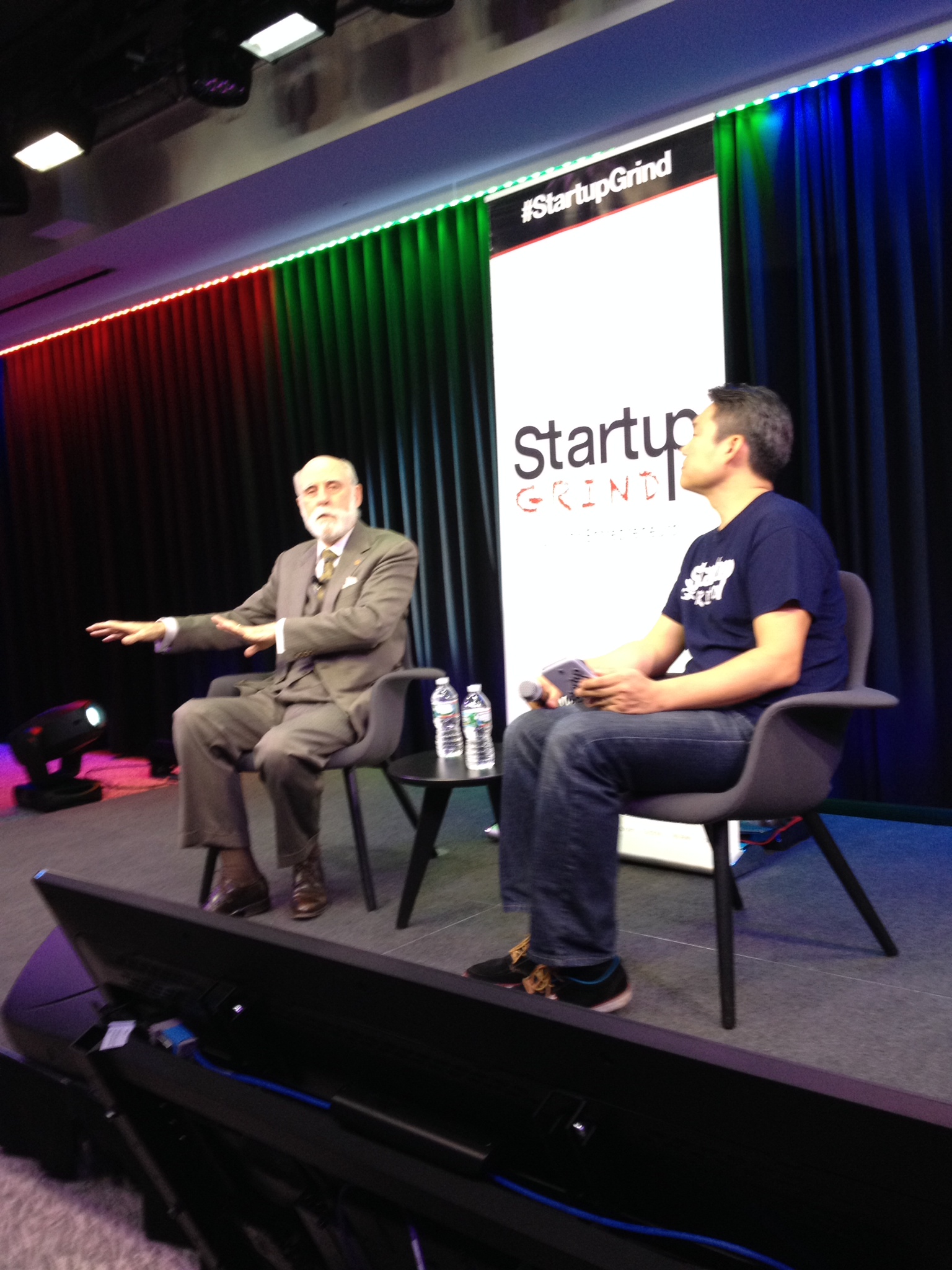
Internet Founding Father and Google's VP/ Chief Internet Evangelist, Vint Cerf, brings warm, personal style to great substance

Internet Founding Father and Google’s VP/ Chief Internet Evangelist, Vint Cerf: Style and Substance!

In October, I went to a Startup Grind at Google’s new DC space to hear Google’s VP and Internet Evangelist, Vint G. Cerf, riff about life as a “Founding Father” of the Internet, net neutrality, smart cities, the IPv4 address shortage and other topics, including his 15 minutes of fun fame on the Colbert Report.  I’d jumped at the opportunity to hear the Internet back story from the man who invented TCP/IP, the protocol behind the Internet’s fundamental architecture.

How big a deal was his invention?

TCP/IP used Ethernet, LANs, 3G/4G etc to glue many networks to each other.  It supported FTP, email, HTTP and thus the World Wide Web.

Holy cow! as Vint would say.  And, several times that night, he did.  It’s no wonder Vint Cerf has been inducted into The Internet Society’s (ISOC) Internet Hall of Fame.  Sure, he co-founded ISOC, but somebody had to do it.  Among his many awards, he’s also snagged a Presidential Medal of Freedom.  In fact, Vint has got enough laurels to stuff a mattress, but he doesn’t seem to rest on any of them.  He’s the perfect Internet Evangelist for Google.

A little background

The Internet blossomed in 1973 , a time when students, like me, typed papers on manual and electric typewriters and communicated on the run by finding a working pay phone. Back then, wireless, like hairless, meant you simply had none. A couple of years before, Vint and communications specialist Robert Kahn, had figured out what the software should look like to connect fixed-location computers as part of ARPANET (the Advanced Research Projects Agency Network), which he calls a “national-scale packet switching experiment.”   “As a net result of that, no pun intended,” he notes, “email was invented in 1971.”  By then, Robert Kahn had gone to work for the U.S. Military’s DARPA program.  By the Spring of ’73 he showed up at Stanford where Vint was teaching to enlist his help in solving the problem of how the Military could use computers in command and control.

The rest really is history at blazing fast speed.

The following is just a taste of the experience from Vint’s talk.  He recommends checking out the exquisitely detailed essay from the Internet Society written by Barry Leitner called: “Brief History of the Internet.”  Google it later.

Here’s a sample of the story in midstream that Vint told at Startup Grind:

“All we had at that point were dedicated telephone lines connecting fixed computers,” Vint said, and then he warmed up to full storytelling mode. “We can’t have wires trailing from the planes, they’d never get off the ground, the tanks would run over the wires and break them, the ships get all tangled up so we had to use ground mobile radio and satellite networks so even if we built packet switch networks using ground mobile radio and satellite, how were we going to hook all these things together because they don’t work the same way…”

The problem and solution idea, he said, were simple:

We didn’t want each computer at the edge of some ‘net over here to know how many ‘nets it has to go through to get to a destination.  We didn’t want each computer to have to figure out how do we route this thing through this network.  Oh, and we weren’t allowed to change the networks to know they were part of the Internet.  So none of those packet switch networks had any idea they were part of the Internet.

Now, that seems like a pretty tough problem to me, but according to Vint, “You can see the design jumping out at you as a result.”

He added that encapsulation and decapsulation were how they hopped the Internet protocol packets through all of the different networks.  It was like sending postcards in envelopes to each network, which it opens blindly, exclaims, “Holy cow, a postcard!” and puts it into another envelope bound for the next network.  Because the networks didn’t know they were connected, the team put a box between them that knew how to talk to both nets.

“It’s as simple as that,” he concluded, after a more complete explanation that’s worth hearing him deliver on the available Startup Grind podcast.  “The only problem was designing all the details.”

Simple was the new brilliant:

“The cool thing,” Vint adds, “is that the only party that needs to know what the payload in the packets means is the one on the edge.  So, if you want to create a new surface on the Internet, you don’t have to change the network, you just change the way the bits get entered and reviewed by the target machines.  So people invented all kinds of new applications on the net and the network just quietly grew its ability to move packets around, that’s all it knew and that’s all it has to know.  That’s why you have a cornucopia of applications on the net.”

Vint describes the challenge of creating architecture to allow them to keep sweeping in new communication technologies as they came along and hide how they were connected from the computers at the edges of all the Nets.

Vint describes the challenge of creating architecture to allow them to keep sweeping in new communication technologies as they came along and hide how they were connected from the computers at the edges of all the Nets.

Why call it the Internet?  “We talked about internetworking, but it took too long to say that over and over again,” Vint explains.   In December 1974 he and two graduate students wrote the details of TCP/IP in a paper called “A protocol for packet network intercommunication” in which they referred to it as the Internet.  “It was the first use of Internet in a publication, and it stuck.”

Vint, though born in New Haven, CT, in 1943 at the end of the war, promptly moved with his parents to California’s San Fernando Valley.

I asked Vint: Did your dad’s career in the Aerospace industry have any impact on your taste for innovation?

“My dad was part of the personnel management and development team at North American Aviation and I had the opportunity to compete for scholarships and summer jobs at various NAA divisions.  While my father’s training was primarily in the liberal arts and public administration, he was a competitive Phi Beta Kappa scholar in college and excelled academically in high school.  He was always encouraging me to excel in academic work, regardless of the field.”

More joy, less ego

It was Vint’s open and generous nature that struck Conrad Daly, the first-time Startup Grind attendee sitting in the second row, just behind me in this intimate setting.  He’d moved to DC about three years ago.

“I was surprised that he was able to speak so modestly, as if he were a teacher,” he said.  Conrad retains way more of his Irish accent than that of Tennessee, where he moved from London at age 6.  When asked about his background he says, “I like to say where the Beverly Hillbillies moved from, is where we moved to.  You, know, as the drunken crow flies.”  So where exactly does his accent hail from?   “Mum’s Irish to the hilt, with all of her family being from Galway area; Dad’s more complicated.  He was born in Egypt to French and Scottish parents who ended up over there through missionary work.”

Fascinated as I was by Vint, Conrad has a nice story of his own.  Following law school at Cornell Law School, where he got his J.D., and then at the Sorbonne, where he got a Master 1 and Master 2, Conrad has been mostly doing anti-corruption and justice reform work, both at the World Bank and with private clients.  He first got an idea for the app he wanted to create when he was on a project and frustrated by being unable to locate an English-speaking solo practitioner in Eastern Europe to turn to in the long-term. “I thought, this is ridiculous,” he explains: “I was looking for a partner and had to revert to a more limited service provider.”   He tapped LinkedIn, he tried his network, he asked his friends to search their networks.  Nothing. “This doesn’t make sense.  A region such as Eastern Europe must have many more small and solo practitioners than the U.S. does, and the U.S. has 63 percent.  I thought, ‘they’re out there; why are they so invisible?'”

Later, doing work for the World Bank, he couldn’t accept that businesses in developing nations trying to work with businesses in other developing nations were by-and-large forced to operate through the medium and limited networks of western entities rather than networking directly with colleagues in that other country.  This practice raises costs and inhibits competition.  “For example, if you’re a Chinese entity you tend to go with one of the larger law firms in Hong Kong, not because they’re the best option or only option, but because they are the most visible and recognizable option,” he says.  “While there will always be a place for Big Law and Big Finance, that place is not ubiquitous.”  It doesn’t make sense for enterprises to pay top-tier firm rates just to get a small question answered or test the water rather than launch a full-out project.

The result was an idea for a new startup: mApptus, a networking exchange to locate practitioners with specific skills in the legal, financial, international, governmental and, where applicable, education sectors.  “Moreover, as an app for mapping aptitudes, mApptus will offer users a nuanced means of searching for practitioners, especially those who straddle professional columns, thereby hopefully breaking out of siloed mentalities, while also catering to the personal aptitudes and interests of individual practitioners.”  He hadn’t come to pitch it that night.  He’d come because he wanted to see the man who helped create the Internet.  But, when he realized Vint was giving honest, helpful feedback he found himself on his feet describing mApptus. He was glad he did.

“Immediately, he gave me two different names to look up and then, thereafter, he chatted about the general idea with me and it was positive feedback,” he said.  “He’s a fantastically interesting character.  Clearly intelligent but also very humble about it.  He treats [his accomplishments] like anybody else’s everyday work.  I’d heard that he was engaging, and wanted to have the experience of hearing him in person, but I hadn’t expected either such humility, or such individualized attention.”

I asked Vint: The aspiring entrepreneur, Conrad Daly, was struck by your modesty — would you say your openness to dialog in such a forum was honed in the classroom in your four years teaching at Stanford?

“Not so much there as in the research program at UCLA where, in Len Kleinrock’s laboratory and Gerry Estrin’s laboratory, we were given fairly free rein.  We had great respect for each other’s perspectives and our debates always assumed that all of us were working towards a common goal.  We understood that teamwork was important and so was mutual respect, especially when we were exploring differences of opinion.”

Reflecting further on the evening, Conrad said, “It is encouraging to see a tech person with that sort of outlook who has decided that California is not the place to be for him, and that Washington, DC and the East Coast is. ”

Vint has his own thoughts on the matter:

“I had many opportunities to move back to the West Coast but I didn’t because we have more fun in this town than we ever had anywhere else,” said Vint who has dealt with every U.S. Administration since and including Carter’s.  “You never know who you’re going to work with next.  You never know who you’re going to bump into at some casual event who later turns out to be a really helpful connection.  And in this town, believe me, the ‘who you know’ counts a lot for getting things to happen. We just had an absolute blast in this place.”

Perhaps what makes Vint so interesting is how interested and down-to-earth he is about innovation.  It’s as if you crossed an accomplished computer scientist with Doctor Seuss — “Oh the places you’ll go!”  And, the people who’ll follow you there.   Like the folks he convinced to let MCI Mail go online “just for a year” to break the no commercial use  barrier on the Internet?

I asked Vint: …Would you say your people skills helped you progress?

“I think a significant part of leadership must be enthusiasm for the work at hand and the objective at which that work is aimed.  How can you possibly follow someone or work with someone who doesn’t share your passion?  I recognize that big things only happen when a lot of people are committed to them.  Hence, my continued enthusiasm for pretty much anything I get involved in doing.”

If he could do one thing differently, it would have been to make the Internet more secure with very strong authentication mechanisms…and to have had a crystal ball that warned him they’d need waaaay more IP addresses. He explains, “I thought at the time that [the Internet] was an experiment and I thought that if it worked we would then develop a production version of it. The problem is the experiment got loose into the general public in 1989 and we couldn’t stop it from taking off.”

I asked Vint: Have you told your stories over and over at A-list events but found meaning in sharing the living history moment with your fellow guests?  Like a rock star, you want to play new songs but understand a few classics need to be played?

“I learn a great deal about history when meeting with those who shared it (and saw it from their unique perspectives).  And I find it even more interesting to meet young people with new ideas (or even old ones that might work now even if they did not work in the past).  It is fun to work with people who are too young to know ‘you can’t do that!'”

For me, this Start up Grind was personal. I came of age in the “before and after” of the connected world. It changed what I did, how I did it, who I did it with and launched my continuing quest for the next-new possible.  It enabled me to work steadily, part-time from home for over 20 years and amass a tremendous variety of experience while raising three kids, helping my community and continuously learning to remain relevant in a changing workplace.

Thank you, Vint Cerf.  You’re one of my heroes.
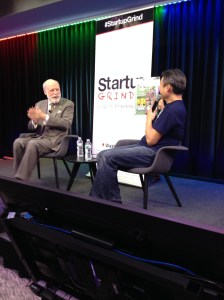
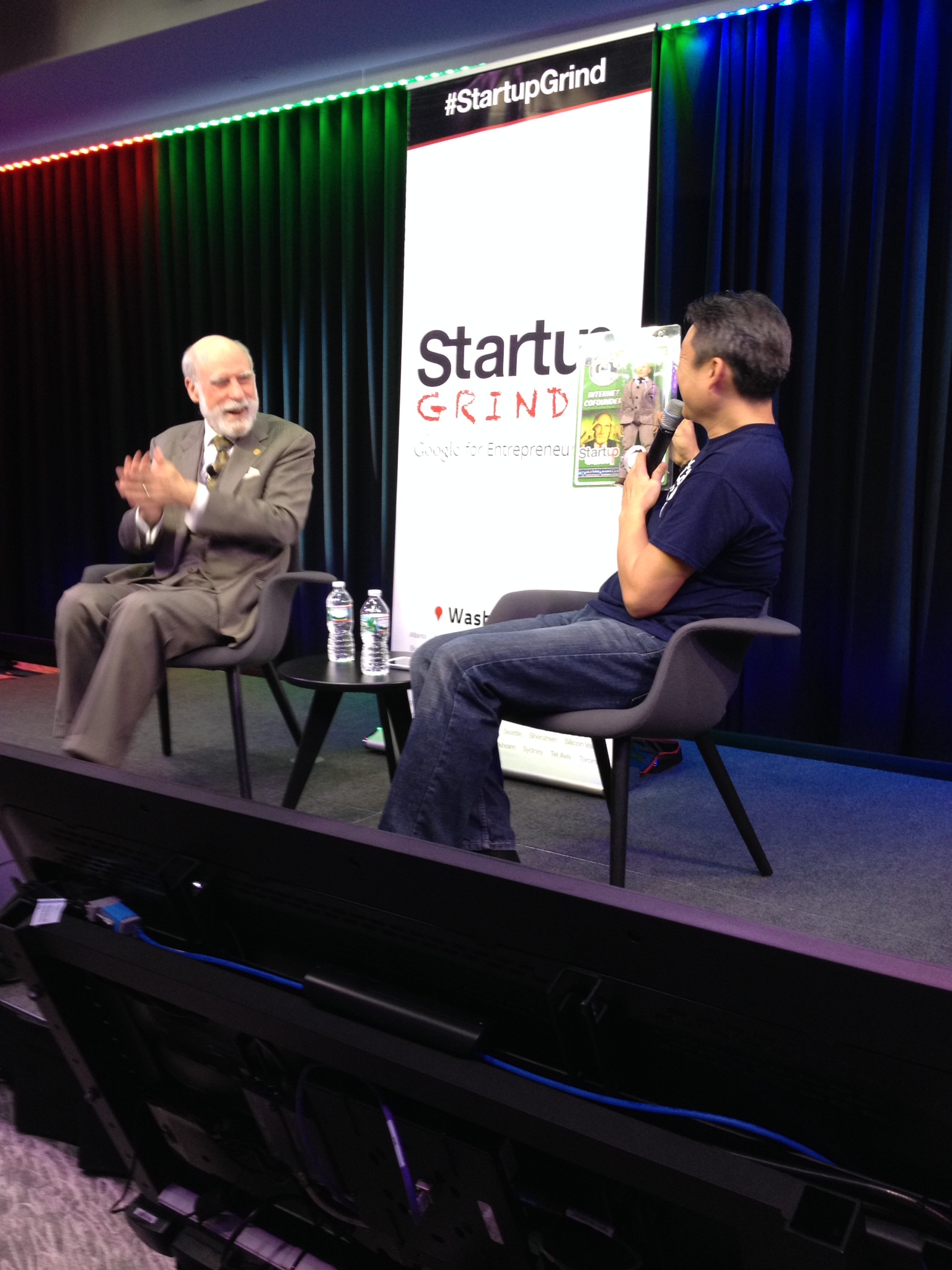
Startup Grind's Brian Park presents the Vint Cerf super hero he had made just for this occasion.

Startup Grind’s Brian Park presents the Vint Cerf super hero he had made just for this occasion.

You’re off to Great Places!
Today is your day!
Your mountain is waiting,
So…get on your way! — Dr. Seuss, Oh, The Places You’ll Go.

Oh, and in case you’re wondering what you can do for Vint Cerf and the rest of the world?  Ask your ISP in no uncertain terms to give you the date and time when you can get IPv6 addresses from your service.  We should be doing v6 to support the internet of things…

Posted in Computer Scientist, DC Metro Area Startup Community, entrepreneurial community, entrepreneurs, Google, innovation, mobile applications, Startup DC, Startup DC, Startup America, communications strategist, startup grind, startups, The Internet of Things, Vint Cerf | Tagged , , , , , , , , , , , | Leave a comment

SmartThings, The Internet of Things and Just Plain Cool Things

If you missed the back story on Smart Things, now that it’s been acquired by Samsung for a reported $200 million you might be curious!

Janice K. Mandel's avatarJanice K. Mandel

Alex Hawkinson, SmartThings, and Brian Park discuss The Internet of Things at Startup Grind in DC Alex Hawkinson, SmartThings, and Brian Park discuss The Internet of Things at Startup Grind in DC

Alex Hawkinson continues his 15-year leadership path with cloud-based technology companies as Founder and CEO of SmartThings, a platform to connect and control objects in the physical world remotely. Two things he said about the next phase of how we interact with the internet, the Internet of Things. First, it’s up to us if we want to start living like the Jetsons or deciding what we will accept; and it is hard to know how things like companies are valued. Imagine the things you’d like to be able to monitor or activate by pressing buttons on a digital device. Alex told the Startup Grind DC attendees that he is working through his company, SmartThings, to promote a software platform to facilitate creating a connection with things.

Imagination and motivation is the only limit on…

View original post 1,186 more words

Posted in Uncategorized | Leave a comment

Why Routeam Wants More from You than Step Counters


Routeam co-founder, Coach Dustin J. Canter, drops in for a spin as promised.

Routeam co-founder, Coach Dustin J. Canter, drops in for a spin as promised.

Virtual communities strengthen and disrupt existing institutions.  We’ve seen them place new resources and connections within reach of previously unconnected individuals and organizations. It was only a matter of time before the fitness community harnessed this development.  We have entered an era in which networked electric-powered devices not only are being used to strengthen businesses but also local face-to-face communities.  Devices like Fitbit, the step counter and sleep tracker, spur people on to daily fitness goals by tracking progress and vibrating with victory.    

The fitness industry is ripe for this revolution – perhaps more than any other – since it’s all about individuals and businesses on the move.  Capitalizing on that movement is only logical.  Large club legacy systems aren’t agile enough for the increasing specialty fitness studios popping up around town or the individuals looking for a variety of fitness experiences.  Teacher/coach quality counts and facilitating registration for one-off deals helps individuals sample the culture at top local fitness studios.  And, that’s just one step towards enabling individuals to take control of their health and wellness routines. 

Finding Your Routeam

Routeam is becoming a central, online fitness marketplace strengthening personal community relationships through event and class registration, communication and group/individual coaching.  The idea is simple: Routeam provides real-time connections between individuals and their personal trainers/teachers/coaches and workout buddies on the move.  In addition, its affordable infrastructure extends the fitness professional’s reach beyond the studio into nearby neighborhoods and workplaces.

“Routeam lets people do more of what they love,” says co-founder and serial entrepreneur, Coach Dustin J. Canter.  “It helps certified wellness/fitness coaches and studio owners spend more quality time with fitness clients and less with marketing, selling and low-value transactions, such as class registration.”  It also enables individuals to personalize their fitness routines.

Engaging with Community

Dustin is all about community and strategic connecting. I first met him at a Startup Grind event in February 2013.  Routeam combines Dustin’s passion for entrepreneurship with a commitment to fitness.  After college, Dustin had been featured on Biz Kid$, a TV series about young entrepreneurs for forming a local storage business and bagel shop near the University of Illinois.  He learned from his successes and mistakes and returned to DC to regroup and learn more about health and wellness as an industry.

Dustin and I connected on LinkedIn after a friend recommended an indoor cycling class I lead.  We met at In the Capital’s “DC Upfront” Education Summit, he took the class, and afterward filled me in on the development of Routeam with co-founder Andrew Conklin, a federal contractor looking for a change.

A runner who had heart surgery at age 1 ½, Andrew takes wellness and fitness seriously. “I had been working part-time on a tech platform to make it easier for students to sign up online through one profile for yoga and fitness studios around DC,” he explains.  Discovery conversations with several studio owners convinced him the idea was worth pursuing.  Andrew says he started the DC Nightowls co-working meet-up in 2011, in part, “to have a place to work on this project.”  Dustin, who had also begun pursuing a project around helping people achieve health and fitness goals, met Andrew at a couple of DC Nightowls co-working sessions. The two clicked and started an ongoing conversation.  People don’t just need fitness routines, Dustin reasoned, they need to be part of a local team to help and hold them accountable for ongoing fitness goals.  They need a “Routeam.”

Dustin and Andrew, who coined the company mantra “Be Healthy,” joined forces in 2012.  The following year, Andrew dedicated himself full-time as co-founder to strengthening the DC fitness community.  “Dustin has a very strong vision for Routeam and understands the growth milestones of a business,” he observes.

Dustin’s also got a keen instinct for team building.

Building Routeam’s Team

Sean McGinnis helps keep Routeam and its business clients organized.  Despite being in the same graduating class at the University of Illinois, Dustin first met Sean through a mutual friend in DC.  Director of finance and business development at a local environmental consulting firm, Sean also contributes his finance and business management skills to help foster understanding in the global community.  Since 2011, he has served as Treasurer for the Water Resources Action Project, a 100% volunteer, nonprofit that builds rain collection systems in schools in the Middle East.  “The idea is to connect schools through these water collection systems and create cultural exchange through the shared experience of managing this scarce resource,” he says.

As Routeam began to evolve, Dustin recalled that Sean also had a passion for health and fitness and arranged a meeting to discuss how he could help build the company.

“Dustin’s great at keeping in touch,” says Sean.  “When the idea for Routeam turned more into action, Dustin came to me and said ‘Here’s what I’m thinking.’ I told him right away that there are areas where I can add value to the company.  My involvement has been business management, financial management as we have evolved from day one.”

As a side project, Sean has organized Routeam’s foundation for financial procedures, interacting with customers and clients through reporting with cash-flow solutions.  “Dustin and Andrew are very creative minds,” says Sean.  “As the business has evolved, I’ve been there saying ‘these are the things that we need to be mindful of’ and assisted them along the way.”

Connecting with Community

As Chief Technologist with a history as a “community activator” Andrew has invested time and effort into developing a series of eight tech interns as he builds out Routeam.  He met current intern, Nadia Chilmonik, a rising senior at George Washington University, as he represented Routeam by rolling out a yoga mat at the GWU startup career fair. “Nadia passed over some bigger brands to work with us,” he says.  The computer science major is technical intern #7 and joins the ranks of computer science master’s students Fenhan Wang, Junyi Hu, Yu Song, Himanshu Adhwaryu, and DC Nightowls transitioning from business backgrounds, Jon Koehmsteadt and Doug Phung.

Helping students get beyond C++, .NET, Java and the other older programming languages that schools teach costs startup mentors valuable time and productivity.  Dustin and Andrew choose to see this as an opportunity to develop outstanding programmers; hopefully, some future Routeam contractors.

“There are so many kids out there that want experience and a mentor,” says Andrew.  “Unfortunately, the established courses in our local schools don’t cover much modern development.  A lot of startup companies don’t have the patience, mentors or interest to take on a kid without any experience in their startup-friendly language or framework because it takes 3-4 intensive weeks to get them going.  Hopefully, the more established schools will start to roll in Ruby on Rails, Responsive Design and all of these extremely important concepts that only the professional development boot camps are covering right now.”

Andrew is happy to help.  “Anybody with determination and passion gets a shot with my tech team,” he says.  I put what I’ve got from my past experience as a software engineer and a community activator to make them great developers for as long as they are affiliated with Routeam.  I encourage them through core development and their own side projects.  Nobody is born with this skill.  It’s practiced, it’s learned and practical guidance can accelerate them.”

Evolving Naturally with Routeam

Nurturing talent at Routeam isn’t limited to technical skills.  Last fall, Emily Stein, a registered yoga teacher and certified health coach with an MAT in Education from GWU, used an early version of Routeam to register clients and support her through the lean, early years most coaches face when building a new client base. It wasn’t long before the company started working with Kaiser Permanente to provide small group personal training at one of its existing wellness program locations.  Emily recognized the company’s potential and wanted to help Routeam expand its wellness programs and community reach.

“I wanted to do communications and marketing and help Routeam grow the business,” she says.  At the same time, the new communications and marketing director learned she was about to became a new mom.  Emily appreciates Routeam’s support as she finds her personal approach to work-life balance going forward.  In the process, Routeam’s co-founders extended the caring culture with which they approach clients to its own team.

Ask for More

Which brings me back to last March when Dustin came to my cycling class.  He showed me how far along Routeam’s mobile app had progressed and talked about taking Routeam to the next step.  I offered to help out with some writing.  He channeled his inner coach and said.  “Thanks.  But, I want more than that from you.”

Dustin is building the team that can position Routeam to help the local fitness community grow. It’s going to take a sustained, multi-pronged approach to introduce and connect fitness/wellness centers and individuals so they can thrive, mingle, collaborate and grow in a competitive market.

Going forward, Routeam will contribute to support local, active fitness culture by allowing individuals to go online to seek local training buddies with similar schedules and group training interests.  “It’s an unobtrusive sales process,” Andrew observes.

Finding Out What People Really Want

Routeam’s Chief Wellness Officer is Andy Shields.  With a clinical psychology degree from Washington University in St. Louis, Andy worked as a researcher and spent four years as a health and wellness coach with corporate programs through Blue Cross and Blue Shield of Kansas City.  He won’t tell you that he passed on going to Harvard to play baseball for Wash U, but Dustin might.

This year, Andy made the move to work on developing questionnaires for Routeam clients and prospects to understand their pain points and which features and capabilities studios, organizations and individuals that could help.

He explains: “I want to take the knowledge I’ve gained working with individuals and use that data to cater our products towards the greatest amount of individuals, rather than the masses.”

Andy’s also exploring Routeam’s potential with large organizations.  “Our job with large organizations is to present them with many different ways to help people become engaged in whatever programs they offer,” he says.  “We’re partnering with the best and figuring out what to offer.”

Layering studio infrastructure needs with fitness community tools, Routeam does the following:

For individuals:

  • Enjoy local high-end private fitness studio classes or training. Coaches are certified and vetted to meet the standards for corporate wellness programs.  Could online client ratings be far behind?
  • Sample the personal culture of local fitness/wellness studios. They have the option to access their workout routines and records from any device online. Studios enjoy the platform’s unobtrusive sales process.
  • Organize training buddies with an option of using a mobile app to meet and engage the right level coach.

For business platform users:

  • Use affordable mobile-based infrastructure to run, track and market fitness classes and coaching services.
  • Support community interaction by organizing mixers or coordinating large, live community events.

Cities Thrive Through Communities

We already see the natural connections around shared activities that enhance life in transient cities.  Near the Farragut North Metro stop in Washington DC, especially when the population swells with interns, at 8:30 pm distinct groups emerge: runners, uniformed cyclists, softball teams and a tai chi class in the small park across the street.  Anyone can pull together a group.  Individuals can post an ad on Meet-up to meet at a time and place.

Now, the fitness industry is poised to enhance communities by promoting better fitness and health, not just tempting people to pay for access to equipment and tracking every step.

Posted in DC Metro Area Startup Community, entrepreneurial community, entrepreneurs, Fitness, Health, In the Capital, Startup DC, Startup DC, Startup America, communications strategist, startup grind, startups, Uncategorized | Tagged , , , , , , , | Leave a comment

What Do Ted Leonsis and FiscalNote CTO, Jonathan Chen, Have in Common? Enjoying College Graduation Season for Starters!

50onfire

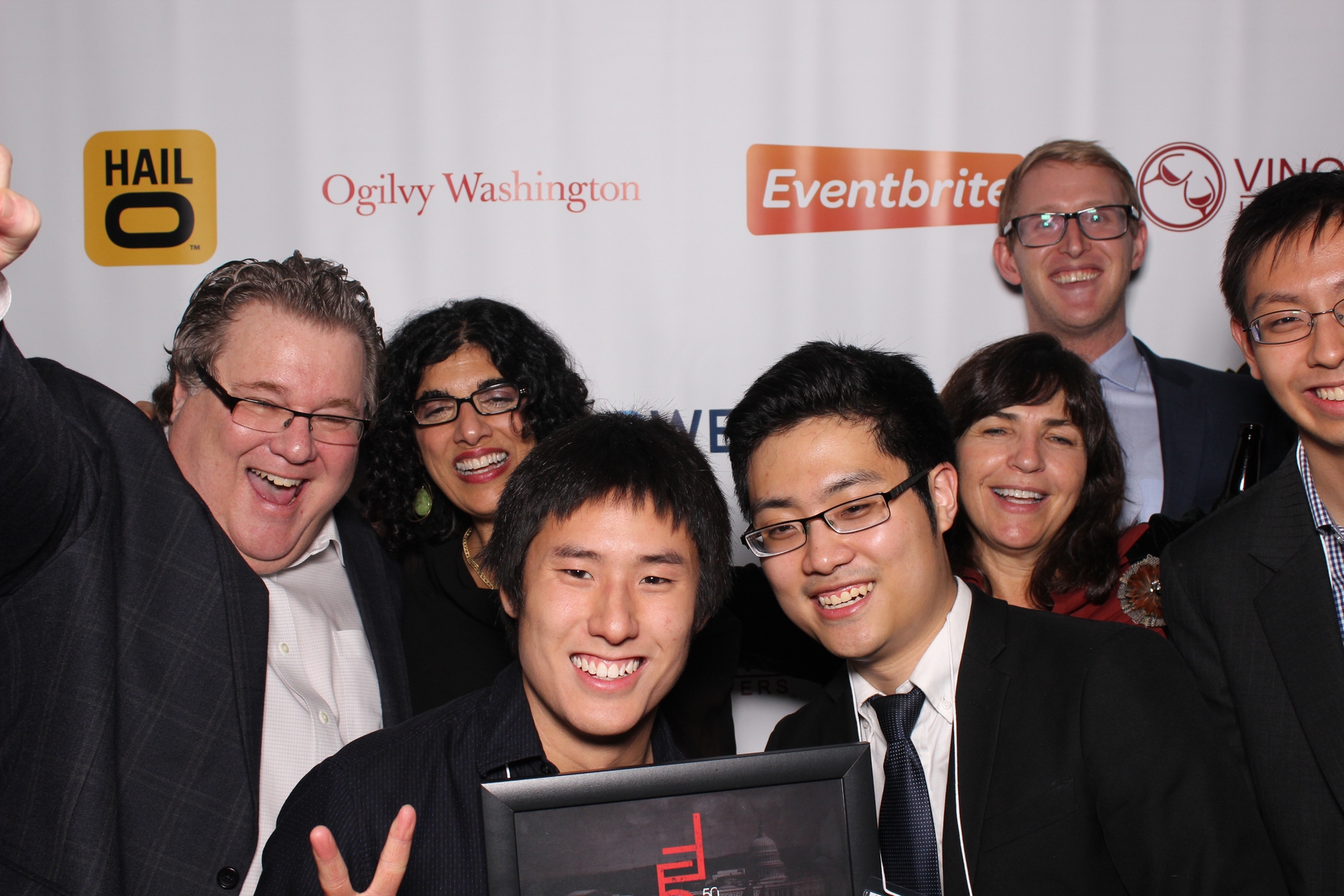
FiscalNote’s founding team Jonathan Chen, CTO, (center); Tim Hwang, CEO, (near right); Gerald Yao, CFO, (far right) joined by Michael Weaver, VP of Business Development (back right) at. And, on the left special guests…the Greenbergs, parents of In the Capital Senior Staff Writer, Molly Greenberg.  Hilarious!  That’s me squinting at the camera.

I live in North Bethesda and ride my bike a little over 9 miles to Potomac, past the outer gates that lead to the road that leads to the Leonsis family home.  Ted Leonsis, Revolution LLC growth equity investor, owner of Monumental Sports and Entertainment and former AOL marketing executive is a big fish in our little DC pond by the Potomac.  This past March at Startup Grind DC at the atmospheric WeWork, Chinatown, co-working space I heard Ted say:

“I love people-to-people oriented businesses because I believe you can connect through hard work, authenticity, building a sense of community and that you can scale big businesses and have a really good time doing it.”

What else would you expect from the author of The Business of Happiness: 6 Secrets to Extraordinary Success in Life and Work?

The theme for today’s blog is:

Here’s what Brooklyn-born Ted Leonsis and North Potomac raised Jonathan Chen have in common.

Good topic and, I’ll admit, just in time.  I had promised Jonathan, CTO of FiscalNote Inc. to write about his well-funded and staffed company’s platform to access, track and analyze real-time federal and state government information before he graduated from the University of Maryland – which he is doing this week.  Jonathan will be a commencement speaker at his college graduation, too.   We first met when FiscalNote won recognition as one of the DC’s 50 on Fire event, sponsored by In the Capital.

Jonathan Chen, CTO, FiscalNote holds his team's 50 on Fire award at In the Capital's 2013 event

Jonathan Chen, CTO, FiscalNote holds   his team’s 50 on Fire award at In the Capital‘s December 2013 event at DC’s The Powerhouse.

So, without further stretching this connection, here’s what Jonathan Chen and Ted Leonsis have in common:

Conscientious, immigrant parents (from Greece and Taiwan) who made lives and forged out careers in the U.S.

Their mothers contributed significantly to their engagement in education.

Jonathan’s mother encouraged him to apply for a Chinese government sponsored paid internship program for American-born Taiwanese students with the best private companies and government organizations in Taiwan. “It’s competitive.  They accept only 300 Chinese-American students, I was surprised I got in,” said Jonathan, who observes that at his excellent Montgomery County high school he learned basic computer science concepts and lacked hands-on skills.  But, he did get in and at the National Center for High Performance computing he learned practical experience like how to scale and cloud computing, making websites using legacy code.  “It was my first time working in the industry in the real world and it was pretty awesome,” said Jonathan.  As part of his internship, he and three other interns were told to make websites and apps and had to figure out how to create them with help from the organization’s experienced employees.

Ted told the Startup Grind crowd that his mother told him to always “do things properly.”  Ted learned by his parent’s example to work hard with a business owner’s enthusiasm and attention to details.  Instead of cutting corners, he distinguished his lawn-mowing enterprise by researching how to cut lawns and distinguishing his service through the Wembly Cut.  When he worked on Paul Tsongas’s successful campaign for congress and later senator in Massachusetts, he says “I worked like crazy to get him elected,” says Ted.  “I remember him saying to me: “If you work this hard in a business you start, you’ll be a millionaire before you’re 30 years old.  I’ll never forget that.”

Ted Leonsis as Startup Grind DC guest at WeWork, Chinatown, makes his points with a smile

They are empathetic, appreciate others and maintain lifelong friendships.

Ted is still friends with his roommate, Jim Shannon, at Georgetown who funded his idea for a Snocoloco snowcone business (with variable pricing, depending on the temperature) the summer of the Bicentennial DC tourist rush.  A seminal experience.  “I couldn’t wait to get up in the morning,” he said.  “We just marketed like crazy and built a nice business.”  It even included cutting a deal with the zoo.  “Our first OEM deal.  We manufactured and delivered 100 snowcones a day.”

He will tell you the name of the man who employed his lawn service to do its distinctive Wembly Cut who later suggested he consider Georgetown and wrote him a letter of recommendation.  He deeply feels the impact of the Jesuit priest at Georgetown, Father Durkin, who encouraged him to pursue big ideas with the most modern available technology in 1976: an IBM 360 punchcard mainframe computer in the registrar’s office, a linguistics major and the one guy on the Georgetown campus at that time who knew how to program in fortran and basic.

“The four of us created maybe the first algorithm applied to a non-computer science application,” says Ted, explaining that he was an English major trying to prove that Ernest Hemingway’s lean, Pulitzer-prizewinning book, The Old Man and the Sea, was written much before the author’s less engaging 400-page books like Across the River and into the Trees.

“It was 1976 and Father Durkin said to me ‘I think this is the first time liberal arts and technology have come together,” Ted says, recalling a “goosebumpy moment” reading Steve Jobs’s reported reply to  why is Apple the world’s most valuable company?  “Apple is the place where liberal arts and technology come together.”

Jonathan collaborated on the prototype for the FiscalNote Prophecy platform with Tim Hwang, CEO, his friend since elementary school and Gerald Yao, CFO, who they both bonded with in middle school.  FiscalNote Inc., is a real-time government analysis company that provides a web-based software platform to aggregate and analyze state and local government legislation.  It gives companies and organizations the ability to track legislation and prepare for it.

They kept in touch about the project while Jonathan went to University of Maryland (UMD), Gerald to Emory and Tim to Princeton.

Tim handles business development with guidance from Princeton alum advisor, W.S. Shi, Chairman of Elsevier, among others.  Tim and Jonathan initially discussed the idea in late March and decided to enter it into a small, brand new pitch competition, The Fishbowl, sponsored by UMD’s computer science department.  He explains that they took second place but were told they would have won if they actually had a product to demonstrate.  “This validated the idea and told us we should pursue it,” said Jonathan, who describes pursing the next step of applying to accelerators.

The team attended 10-week Plug and Play Startup Camp in Silicon Valley in the summer of 2013, and currently are mentored by Ali Reza, who invested $25,000 and a lot of hands on help and connections for 5% of their company.  “He helps us a lot.  We have weekly meetings with people he has set us up to meet.”  That July Jonathan, Tim and Gerald were reaching out to as many investors as they could and learned the advantage of the warm intro.  “We’d cold called as many investors as we could and emailed Mark Cuban.  Nothing happened at first, but one of our lawyers knew him, got us a warm introduction and Marc Cuban replied to our note.” And, then there was $1.2 million funding from Mark Cuban alone, which attracted others, such as New Enterprise Associates and First Round Capital, new space, savvy employees and additional advisers.

Most importantly, both Jonathan and Ted value building things that last.

“Our goal is not to sell, but to go big and compete with the big guys in the future,” said Jonathan.  “It will take 30 years to get there.  We think of ourselves as a Bloomberg terminal for government.”

“It’s not a startup grind,” Ted concludes.  “it’s a startup joy.”

Posted in accelerator, Data Transparency, DC Metro Area Startup Community, government accountability, startup grind, startups, Uncategorized | Tagged , , , , , , , , | 2 Comments
Sunlight Foundation director, Ellen Miller speaks with Brian Park at Startup Grind DC on April 21, 2014.

Sunlight Foundation Executive Director, Ellen Miller speaks with Brian Park at Startup Grind DC on April 21, 2014.

Who can manage without measuring?  Who can lead without direction?  How can we fix the government without access to good, open government data?

Startup Grind DC featured guest, Ellen Miller, executive director of the Sunlight Foundation, has dedicated her career to public interest organizations that work closely with the highest levels of U.S. government.  The former publisher of online progressive journal, TomPaine.org, a serial public interest organization founder and a believer that up-to-date, reasonably accurate data is needed to hold the U.S. government accountable for its actions.

Good information tells its own story.  It’s what gets project managers, citizens and journalists started on investigative reporting activities in areas that seem to warrant attention.  Making available the right information to the public gives people a voice and helps keep our democracy on track.

“Everyone is aware of the power of open data,” says Ben Reich, co-founder of datasembly.com, a startup dedicated to “unlocking the power of social data” by getting past the meta-level to link more  actual content.  That takes a ton of automated indexing.

Ben had come to Startup Grind DC when he’d heard about the Sunlight Foundation’s mission for greater government data transparency.  Ben and his co-founder Dan Gallagher have spent years working at big data software/business analytics sites and say they are out to unlock the power of social data.  Making information more readily searchable increases the opportunity to discover information that previously seemed unrelated information. “People are struggling to find open data sets and correlate them effectively,” he observes.  As this relates to accountable government, good data tells its own story, what’s going well, what’s not and – here’s the part Ellen Miller is keen on — what political money buys, specifically.

It’s a small town.  And so is Louisville.

Ellen is from a conservative family.  She’s a mix of her roots in Louisville, Kentucky, and raised on good and civil conversation.  Capitol Hill culture and the art of political persuasion came later.  Ellen is comfortable speaking on her feet.  It’s plain to see she has spent time in the halls of power.

Sunlight’s Open Data Challenge

Sunlight’s Silicon Valley-based adviser, Esther Dyson, summed up Sunlight’s challenges as twofold:

First, to make the government do what it doesn’t want to do – information is power.

Second, to engage citizens who have become cynical.

History is made up of things that changed because people set their minds to changing them.  And, as AOL founder, DC political presence, Steve Case likes to point out, American itself was a startup.

She’s one of those people who will lead a discussion with the phrase, “I’ll tell you an interesting story.”  Fortunately, she’s got a ton.  Ellen is part of a breed of progressive, yet personally conservative, Washington careerists steeped in 1960’s political activism.

The Sunlight Foundation story

Starting Sunlight Foundation wasn’t in her long-term plan.  She started work as a 22-year old intern working for Ralph Nader at $50 per week.  She wasn’t thrilled with how he treated the people who worked hard for him.  It was a good nudge for her to create her own environment that supported exploring and testing a series of new project ideas.

Public interest work, people skills, Capitol Hill know-how, intelligence and a sense of fairness made Ellen Miller a good candidate to lead a foundation. She’d worked in DC since graduating from college in the public interest space and had the opportunity to run two public interest organizations.  As founding director for the Center for Responsive Politics for about 14 years (1983-1997) she is exceptionally proud of the organization’s creating OpenSecrets.org, the premiere organization for crunching numbers about money and politics.  The relationship between money and politics was eye opening.  She also founded the Public Campaign, an advocacy group for public financing of elections.

She was happily serving as publisher for a progressive online publication, TomPaine.com when she was approached by Washington DC lawyer and philanthropist, Mike Klein, to discuss it over lunch.

Disinfecting with Sunlight

“The first thing Mike said to me was ‘I am in the giveback phase of my career.  I think Washington, DC, is full of corrupt politicians and corrupt systems and what can be done about it?’” Then, he tossed out an idea to incentivize reporting around political corruption and its impact at the state and federal level.  If you were making a biopic, you’d include the scene of him beginning to quote Supreme Court Justice Louis Brandeis, a Louisville native.  “Sunlight is said to be the best of disinfectants…” with her jumping in “and I can finish that quote, ‘electric light the most efficient policeman.’”

Mike ended up providing $3.5 million of seed funding for a foundation to keep the relationship between money and politics transparent and thereby uncover or deter political impropriety and corruption.

Jumping in

We talked to a lot of people who were doing political reporting.  They said, let’s take it to the most basic level.  If data on political finance and lobbying and what they get from that – government grants, contracts, positions, advisory committees, whether anyone had been sanctioned by the EPA and on and on …  if that information were more accessible, we could certainly convince our editors we had a story.

“The original vision for the Sunlight Foundation was to create a data commons with all kinds of information that tells the story of Washington, every state capital and city,” Ellen says.  “Our job is not to spin the data, it’s to let the data tell the story,” she explains.  “If you can’t connect the dots with facts then you don’t have a story” she observes, adding “– you don’t have a data-filled story – you just have conjecture.”

Ellen was inspired by speaking with friends at the Personal Democracy Forum in New York City.  “They had been studying the relationship of technology and politics,” Ellen explains.  “Mike Klein and I were more interested in technology and governance.  She hired a team to create, test and keep projects that support their mission to shed light on the role of money, lobbying, politics and what it buys.

Early wins

In the early days, Sunlight gave out a number of relatively large grants, one was $320K for OMB Watch to build the first publicly accessible database on government spending.  It took about 4-5 months for the organization now known as the Center for Effective Government to get it running.  “Within a couple of months of the database going live, the Coburn/Obama bill mandating that the federal government create a publicly available database passed,” says Ellen adding, “ – long story about getting it passed which I don’t need to go into — and OMB purchased the license from the nonprofit to set up the first version of USASpending.gov.  When that happened, a light bulb went off in my head and I said, wait a minute, it is not our responsibility to create data bases out of government information.  It’s government’s responsibility.  And, I hired a policy director, and said we have to make this happen.  We’ll never have enough money to put everything required into place.”

Currently, Ellen says, apps and tools are just a bonus.  The data Sunlight is serving is the most important thing it does — Its APIs are used over 1 billion times.

Of the 3-4 dozen tools created and many killed, several stand out:

  • Open states, a community-based project with 100K – 110K users a month.  Volunteer developers scrape their state legislative sites to be put into a common data format so you don’t have to.  The public can search legislation across the horizon.  So, when you’re looking at stand by our gun legislation you can see how many other states have introduced that legislation and whether word for word or phrase for phrase.
  • Open Congress, a websitebuilt jointly with the Participatory Politics Foundation.  Sunlight has since taken over Open Congress, which has over 125K+ visitors a month.  The popular Congress app, meanwhile, which allows users to track legislators and bills from their smartphone, has been downloaded more than 100K times.
  • Scout, a fantastic app for people following public policy in some direction that scrapes congressional record, Congress and half a dozen other sources and bring concerns to light.

Not all apps bear discussing.  Politwopps, built in May 2012 collects deleted tweets by U.S. politicians.  “I’d rather not share them,” Ellen says. “Some of the things we found deleted are just cringe-worthy.”

Know someone who would be an amazing Sunlight Foundation director?  Now’s not the time to stop tussling with the current administration about $1.3 trillion in errors found in USASpending.gov.

Ellen looks forward to easing in the new director as she transitions out at the end of 2014. “Our work has been catalytic, but has yet to be fulfilled,” she says.

Running an organization takes vision, fundraising and management skills.  Will you lead a movement for government accountability?  Get introduced to innovators in the public interest community.  Attend TransparencyCamp, an organized “unconference.”

Code for America came out of a Transparency Camp.  “We gave them their first $10,000,” says Ellen.


Posted on by Janice K. Mandel | Leave a comment

Don’t Miss the May 15th Panel on disruptive engagement: “Failure, Resilience and Innovation” 

Innovation is at the top of the wish list for many companies, but getting there isn’t always a straight path.  Moira Lethbridge, Principal and Owner of Lethbridge Associates LLC, learned while successfully building her previous company that jump-starting innovation means giving permission to test new ideas and expecting that some will succeed and others will fail.  She works with businesses to incentivize collaboration and use the right kind of failure to increase creativity and innovation.  Structural and cultural best practices define what the spectrum of reasons for failure look like within specific organizations and drill down to define what’s “blameworthy failure” as opposed to “praiseworthy failure.”

As part of this week’s 1776 Challenge Cup, Lethbridge Associates LLC will host a panel of four executives from government, military and commercial organizations discussing how they are using failure to increase creativity and innovation.  Don’t miss this panel on Thursday, May 15, 9:30 am – 1:00 pm at the Studio Theater on 14th ST., in Washington, DC http://sched.co/1ewUcDk .  This is the proposed panel that decisively won the popular vote on the 1776 dc website.

“I’ve seen fascinating ways that people like to kill ideas, she explains.  “Our need for certainty is pretty strong.  People are wired for certainly the same way we’re wired for food or sex.  It’s part of our limbic system.

Wanting to know what the future holds is a huge motivator. When there’s uncertainty, the limbic system thinks it’s a threat. So we say, “Wait a minute. I need the assurance of pleasure and I need the avoidance of pain.” No wonder change is hard, because we’d rather stay with what we know than to take the chance at something new like innovation.

So, businesses need to find a way to normalize the discomfort the chance of productive failure brings to their teams.  Of course, the risks of building a bridge are different from building a mobile app.

“It’s natural to question innovation,” Moira says, “You just have to let people know how to do it in a way that doesn’t prove to be a barrier to innovation.”  One way organizations are working on this is to spell out expectations clearly for employees, for example, “If I color outside these lines am I ok?  Can I experiment with this hypothesis, fail certain tests and be considered productive?  Is there a point at which I go too far and lose my job?”

Failure is simply not meeting expectations.

Tips for success:

#1. Write ideas down in their purest form to avoid losing it to the natural filtering process people go through to try to sell their ideas to different people within their organizations.

#2. Learn to tolerate some ambiguity to remove “violent politeness” – the fear of speaking truth to power or truth in power.  It’s ok to say we just don’t know if something is working yet.

#3. Understand that creative people are allies in innovation and can be assisted with the constraints of time and budget.

What’s your organization’s ratio of blameworthy to praiseworthy failure? When you know the difference between the two, you will understand that not all failures are created equally. Your organization can learn from praiseworthy failure as long as you accurately assess and act on it.


Posted in 1776, accelerator, DC Metro Area Startup Community, entrepreneurial community, entrepreneurs, Uncategorized | Tagged , , , , , , , | Leave a comment